
How Much Business Debt Is Too Much Before You Start Buying Metals

The pattern usually shows up after a strong quarter. Invoices have landed. The account looks healthier than it has in months. Then someone starts talking about gold.
Meanwhile the truck is still on contract. The overdraft is not at zero. BAS is due in a few weeks.
That is the moment people spend money that is not actually free.
Start with spare cash
Metals are rarely the problem. The problem is buying them with cash that is already promised to a lender, the ATO, or next month’s wages.
Ask one question. Is this leftover after the business has paid people, tax, insurance, and debt, and still survived a dull month?
If not, the purchase is early. If yes, put that money in a separate bucket so it stops competing with repayments.
You don’t need a complicated model. You do need an honest look at what happens when work slows.
Use your quietest month
Lenders talk about coverage. In commercial files, credit teams generally want more than a dollar of cash flow for every dollar of scheduled repayments. Plenty of applications get a second look if there is no buffer at all.
The exact multiple is less important than whether the business could still operate smoothly if a major customer paid late.
Run the numbers the unflattering way:
- Add the next three months of contracted repayments
- Include any balloon that is starting to look close
- Add wages, super, fuel, insurance, and a realistic tax set-aside
- Compare that total with the lowest monthly cash you have seen in the past year
Use the worst month, not the best month, and not the average.
If that low month cannot cover the lot without personal funds going in, you are carrying too much debt to divert cash into metals.
A lot of operators pass this test in a busy period and fail it in January, or after a wet stretch when jobs slip. That is why the quiet month matters.
Signs the debt is already too high
It is rarely one loan. It is a truck contract, a trailer still being paid off, a card that absorbed tyres and a gearbox, and an overdraft that never quite resets.
Each repayment looks fine. Together they eat the slack.
Watch for these:
- A large balloon with no savings plan, and less than 12 months to go
- Personal cards or home-loan redraw keeping the business smooth
- An overdraft that never gets back to zero
- A missed week of work meaning a call to the broker
If any of that sounds familiar, you are in serviceability. You are not in surplus.
Balloons catch people. A four or five year commercial contract can look cheap until the residual is close and nobody has put money aside. Buying metal at that point is a distraction.
Keep the truck decision separate
A work truck is supposed to make money. That is why the finance conversation does not belong in the same column as a wealth purchase.
When operators compare truck finance Melbourne, they are usually pricing a vehicle that has to cover its own repayments through jobs. GST-registered businesses can often claim GST on a commercial vehicle through the BAS, depending on the structure and the asset. Interest on a chattel mortgage may be deductible. Depreciation may apply.
None of that makes the debt free. It means the asset is meant to sit inside the trading business. Gold will not get the same tax treatment.
Get the truck right on use, deposit, term, and balloon. Don’t stretch the term just to free up cash for metals. That is extra interest paid so you can hold something that produces no income.
If the vehicle is how the business earns, fund it as an earning asset. Then leave it alone.
Only count cash that is truly free
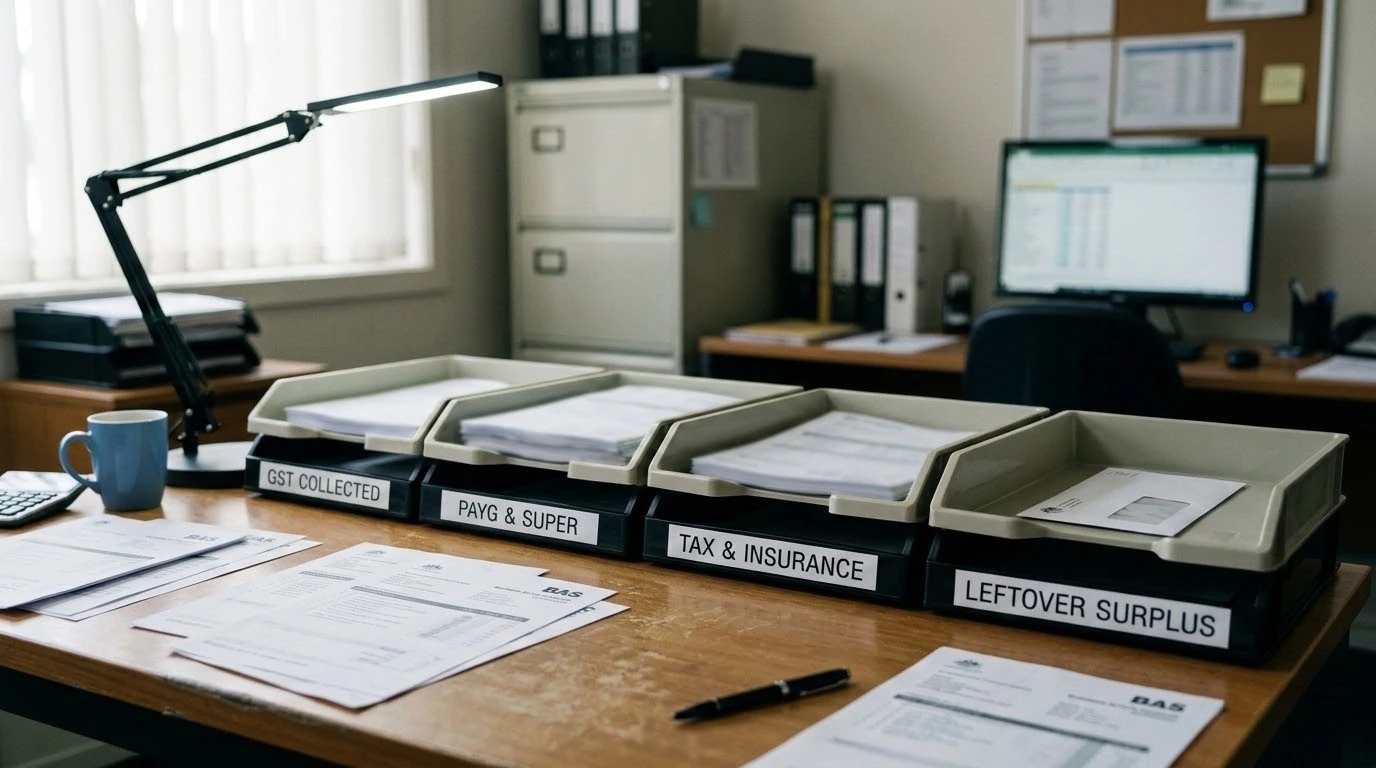
Before anyone talks about bullion, strip the account back. What could you take out without changing how the week runs?
Set this aside first:
- GST you have collected
- PAYG and super
- A cash buffer for servicing, tyres, and insurance renewals
- A separate savings line for any balloon, started now, not in the last six months
What is left after that is the true surplus figure.
In some quarters, that figure might be zero—and that isn't a failure. It simply indicates that the business is putting its cash to work.
It is common to see metal bought in a good month and fuel put on a credit card six weeks later. The gold did not fail. The cash forecast did.
I’ve seen metal bought in a good month and fuel put on a credit card six weeks later. The gold did not fail. The cash forecast did.
Buy metal only after the buffer is real
Once repayments are ordinary, and the buffer has already survived a slow month, you can look at metals without raiding working capital.
For an owner with cash that is truly spare, purchasing gold bullion in Brisbane is a straightforward way to hold a physical position locally. You deal with a dealer, inspect the product, and store it properly.
Investment-grade gold that meets the ATO’s rules can be GST-free. That is not a tax play. On sale, capital gains tax can still apply, and the records need to be clean.
Buy it with surplus, not redraw. Expect a premium over spot. Budget for storage or insurance if you are not keeping a small holding yourself.
Gold will not cover the next instalment if a customer delays. This is why buying precious metals should wait until your debt levels are completely manageable.
Keep it in a separate bucket. Don’t treat it as stock. Don’t treat it as the plant-replacement fund.
Do this in order
- Stabilise the earning assets.
- Make the repayments boring.
- Build a cash buffer that has already been tested by a quiet month.
- Only then move leftover money into metal.
If the debt still feels tight, pay it down or refinance it on purpose. An accountant should review the surplus calculation before making a purchase.
The tax treatment of a work vehicle and a bar of gold are not interchangeable.
If you cannot point to three months of repayments already covered, you are not ready. Come back to metals when the debt is dull.
